Max jump (engineered)
~48 LY
 E:D Black Box
The Type-6 hides a roomy explorer inside a cheap trade hull. Eight optional internals — two class-5 — carry a large fuel scoop, full exploration kit, and cargo simultaneously on a medium pad, for under a million credits. It ranks mid-pack because a class-4 FSD and a slow, lightly-shielded frame cap range and pace below the dedicated explorers — but for cargo-plus-exploration on one budget medium, it earns its place.
This ship's 1–100 suitability rating reflects its fully-engineered fit for this role, scored against every ship in the role. See how ships are rated.
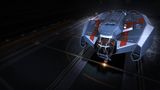
The Type-6 Transporter is Lakon's entry-level medium freighter, but its roomy hull makes it an unexpectedly handy budget explorer. Eight optional internals — two of them class 5 — carry a large fuel scoop, scanner, AFMU and SRV bay with room left for cargo, and a medium pad lands it at most stations. For under a million credits, that's a lot of versatile deep-space capability.
It's a trader at heart, so it's slow, lightly shielded and its class-4 FSD gives only a modest ~48 LY engineered — the dedicated explorers, even the cheap DBE, jump further. But few budget ships combine this much cargo room, a big scoop and medium-pad access. For a commander who wants to explore and haul on one cheap hull, or to ease into exploration in a familiar trade ship, the Type-6 quietly delivers.
Budget cargo-and-exploration: mixed trade-and-survey trips, hauling exploration data or materials home, exobiology with storage to spare, and easing into deep space in a roomy, familiar medium.
Four things make the Type-6 a handy budget explorer:
It's a trader: slow, lightly shielded, with only three utilities and a class-4 FSD giving a modest ~48 LY — the cheap small-pad DBE out-ranges it. It's no dedicated explorer. The Type-6's case is cargo room plus a big scoop and medium pad on a budget — versatility and capacity, not range or pace.
Roomy budget internals and a class-5 scoop on a cheap, gate-free medium carry it; a class-4 FSD capping range at ~48 LY is the limiter.
The 68/100 headline is a verdict against the exploration role's priority-ordered factors. Each factor carries a weight (its share of 100); this hull earns part of each based on how it performs against the whole field. The points sum to the rating.
| Role factor | Score | Why this score |
|---|---|---|
| Engineered jump range | 18/35 | A class-4 FSD with Increased Range + Mass Manager reaches only ~48 LY engineered, trailing every medium rival (Asp Explorer ~62, Krait Phantom ~75, Mandalay ~85) and even the cheaper small-pad DBE at ~68. |
| Heat profile | 10/15 | A light 155 t trader hull on a stripped, D-rated exploration fit with a G5 Low Emissions plant runs cold, so the class-5 scoop never overheats it; nothing about the build generates problem heat. |
| Fuel tank & reach | 8/10 | A Class-5 fuel scoop refuels faster than most budget explorers manage, sustaining long legs; the fixed 4C fuel tank gives adequate per-tank reach for the modest ~48 LY jumps. |
| Canopy & visibility | 6/10 | The forward freighter canopy gives a serviceable but unremarkable view — workable for honk-and-scoop touring, well short of the bubble canopies on the Asp Explorer or Dolphin. |
| Internals | 17/20 | Eight optionals (5·5·4·4·3·2·2·1, two Class-5) carry a Class-5 scoop, Guardian FSD booster, SRV bay, AFMU, scanner and cargo at once — genuinely roomy for the price, with leftover capacity no dedicated explorer offers. |
| Comfort & cost | 9/10 | At ~867k Cr hull with no rank or permit gate and ~7M Cr fully fitted, it is among the cheapest medium explorers; only comfort suffers from a slow 223/356 m/s frame and three utility mounts. |
| Weighted total | 68/100 | Matches the headline suitability rating for this ship in this role. |
Weights are an editorial decomposition of the role's stated priority order — not an in-game formula. Bar length shows how fully each factor is earned; the longest factors carried the score, the shortest are where it gave points away. See how ships are rated.
Every table rates ships for exploration specifically, split by landing-pad class. The Optional cap. column is total optional-internal capacity — room for scanners, AFMU and fuel; the rating is the same 1–100 suitability verdict used across the site.
| Ship | Class | Optional cap. | Pros & cons | Rating |
|---|---|---|---|---|
| Mandalay | Medium | ~154 t | Higher-rated; jump range; heatInternals | 96 |
| Krait Phantom | Medium | ~190 t | Higher-rated; internals; heatComfort/value | 93 |
| Asp Explorer | Medium | ~130 t | Higher-rated; canopy; internalsJump range | 86 |
| Krait Mk II | Medium | ~230 t | Higher-rated; internals; comfort/valueHeat | 80 |
| Python | Medium | ~294 t | Higher-rated; fuel reach; internalsJump range | 75 |
| Asp Scout | Medium | ~74 t | Higher-rated; comfort/value; heatJump range | 70 |
| Type-6 Transporter this | Medium | ~114 t | — this hull (baseline) | 68 |
| Corsair | Medium | ~318 t | Comfort/value; internalsLower-rated; jump range | 58 |
| Type-11 Prospector | Medium | ~288 t | Fuel reach; internalsLower-rated; jump range | 55 |
9 medium-pad exploration hulls carry a rating, led by Mandalay (96). Every same-pad rival lands where this one does — the direct field to shop.
| Ship | Class | Optional cap. | Pros & cons | Rating |
|---|---|---|---|---|
| Anaconda | Large | ~470 t | Higher-rated; fuel reach; internalsCanopy | 94 |
| Caspian Explorer | Large | ~434 t | Higher-rated; fuel reach; canopyComfort/value | 94 |
| Imperial Clipper | Large | ~250 t | Internals; comfort/valueLower-rated; jump range | 63 |
| Orca | Large | ~194 t | Canopy; fuel reachLower-rated; jump range | 63 |
| Beluga Liner | Large | ~370 t | Internals; fuel reachLower-rated; jump range | 58 |
The large-pad exploration field (5 rated), led by Anaconda (94) — bigger pads and bankrolls. They out-muscle this hull on the numbers, but sit a pad class away.
| Ship | Class | Optional cap. | Pros & cons | Rating |
|---|---|---|---|---|
| Diamondback Explorer | Small | ~60 t | Higher-rated; heat; comfort/valueInternals | 88 |
| Dolphin | Small | ~88 t | Higher-rated; heat; comfort/valueJump range | 80 |
| Diamondback Scout | Small | ~32 t | Higher-rated; heat; comfort/valueInternals | 74 |
| Imperial Courier | Small | ~34 t | Higher-rated; jump range; canopyInternals | 73 |
| Cobra Mk V | Small | ~110 t | Higher-rated; internals; comfort/valueJump range | 72 |
| Cobra Mk III | Small | ~64 t | Higher-rated; canopy; internalsHeat | 71 |
| Hauler | Small | ~26 t | Comfort/value; jump rangeLower-rated; internals | 62 |
| Adder | Small | ~30 t | Comfort/value; fuel reachLower-rated; internals | 60 |
| Kestrel Mk II | Small | ~70 t | Fuel reach; canopyLower-rated; comfort/value | 50 |
The small-pad exploration field (9 rated), led by Diamondback Explorer (88) — cheaper hulls and tighter pads. They undercut this hull on the numbers, but sit a pad class away.
At ~867k Cr the Type-6 is cheap, with no rank gate, and a full explorer fit stays around 7M Cr all-in — a roomy, cargo-capable medium explorer for modest money.
It's a value-and-versatility pick. For a better dedicated explorer, the Asp Explorer or even the cheaper DBE is the choice; the Type-6 makes sense when you want cargo room and a medium pad alongside exploration on a budget.
A roomy, medium-pad explorer-with-cargo for around 7M Cr all-in — versatile and cheap, though dedicated explorers jump further.
A roomy budget explorer that keeps its cargo room. Initial is buy-only; A-Rated is the expedition baseline; Engineered maximises jump range while exploiting the Type-6's capacity — explore and haul on the same cheap medium.
| Slot | Initial · buy-only | A-Rated · no eng | Engineered | Notes |
|---|---|---|---|---|
| Utility Mounts | ||||
| Utility 1 | 0I Heat Sink Launcher | 0I Heat Sink Launcher | G1 Ammo Capacity (no experimental effect) | Optional / low-priority — Ammo Capacity adds heat-sink charges. Dumps heat for silent running and Thermal-Vent resets. |
| Utility 2 | — | 0I Heat Sink Launcher | G1 Ammo Capacity (no experimental effect) | |
| Core Internals | ||||
| Bulkheads | Lightweight Alloy | Lightweight Alloy | G5 Lightweight (no experimental effect) | |
| Power Plant | 3E Power Plant | 3D Power Plant | G5 Low Emissions + Thermal Spread | D-rated to save mass; Low Emissions runs cold so the big class-5 scoop never overheats the hull. |
| Thrusters | 4E Thrusters | 4D Thrusters | G5 Clean Drive Tuning + Double Braced | D-rated for mass; Clean Drive Tuning gives efficient, low-heat travel between jumps. |
| Frame Shift Drive | 4E Frame Shift Drive | 4A Frame Shift Drive | G5 Increased Range + Mass Manager | A-rate this FIRST — Increased Range plus Mass Manager is the whole build, pushing the hull to ~48 LY. |
| Life Support | 2E Life Support | 2D Life Support | G5 Lightweight (no experimental effect) | D-rate and go Lightweight to shed mass; life support has no experimental effect. |
| Power Distributor | 3E Power Distributor | 3D Power Distributor | G3 Engine Focused + Stripped Down | D-rated; Engine Focused speeds boost recovery and Stripped Down trims its mass for range. |
| Sensors | 2E Sensors | 2D Sensors | G5 Lightweight (no experimental effect) | D-rate and go Lightweight; exploration needs no sensor range, so save the mass. |
| Fuel Tank | 4C Fuel Tank | 4C Fuel Tank | (No blueprint available) | Stock class-4 tank; fuel capacity is fixed and cannot be engineered. |
| Optional Internals | ||||
| Size 5 | 5E Fuel Scoop | 5A Fuel Scoop | G5 Shielded (no experimental effect) | Optional / low-priority — Shielded hardens the scoop; scoop rate is unchanged. Refuels from stars. |
| Size 5 | 5E Cargo Rack | 5H Guardian FSD Booster | (No blueprint available) | Guardian FSD Booster adds the largest flat jump bonus available; Guardian modules cannot be engineered. |
| Size 4 | — | 4H Planetary Vehicle Hangar | (No blueprint available) | Planetary Vehicle Hangar for surface access; the lightweight class keeps mass down and hangars carry no blueprint. |
| Size 4 | — | 4E Cargo Rack | (No blueprint available) | Optional — adds cargo space; worth it for dedicated haulers. Cargo racks aren't engineerable. |
| Size 3 | — | 3A AFMU | G5 Shielded (no experimental effect) | Optional / low-priority — Shielded hardens the AFMU. Repairs modules between fights. |
| Size 2 | — | 2C Bi-Weave Shield Generator | G5 Enhanced Low Power + Stripped Down | Minimal bi-weave so a botched landing doesn't end the trip; Enhanced Low Power + Stripped Down keep its mass and draw tiny. |
| Size 2 | — | 2E Cargo Rack | (No blueprint available) | Optional — adds cargo space; worth it for dedicated haulers. Cargo racks aren't engineerable. |
| Size 1 | — | 1I Detailed Surface Scanner | (No blueprint available) | Optional / low-priority — Expanded Probe Scanning widens probe coverage. Maps planets for exploration data. |
| Open in planner / Export | ||||
| Open in Coriolis | open | open | open | One-click open at coriolis.io. |
| Open in EDSY | open | open | open | One-click open at edsy.org. |
| Copy SLEF | Copies the raw Ship Loadout Export Format for that state. | |||
The Type-6's two class-5 optionals take a large A-rated fuel scoop and the class-5 Guardian FSD Booster, with the rest carrying an SRV bay, AFMU, scanner and cargo. Its capacity is the draw — none of the dedicated explorers haul trade goods while they survey.
Buy the hull (~867k Cr) with stock E-rated cores — including the class-4 FSD (4E) — on the Type-6's default Lightweight Alloy bulkheads, and drop a class-5 fuel scoop (5E) into one large optional.
Fill the second class-5 optional with a cargo rack (5E) for mixed trips; leave the remaining six optionals empty for now — no scanner, AFMU, SRV bay, Guardian booster or shield yet.
Strip weapons; run a single heat sink launcher as the only utility — two of the three size-0 mounts stay empty until A-rating.
A-rating priority for a roomy budget explorer:
The exploration engineering pattern on a budget trader. Felicity Farseer (maxed) carries the FSD; thrusters, plant, distributor and the rest spread across specialist engineers — pin blueprints for remote G1→G5 application.
| Module | Blueprint | Experimental | Engineer |
|---|---|---|---|
| Frame Shift Drive (4) | Increased Range (G5) | Mass Manager | Felicity Farseer |
| Thrusters (4) | Clean Drive Tuning (G5) | Double Braced | Professor Palin / Mel Brandon |
| Power Plant (3) | Low Emissions (G5) | Thermal Spread | Hera Tani |
| Power Distributor (3) | Engine Focused (G3) | Stripped Down | The Dweller |
| Life Support (2) | Lightweight (G5) | — | Etienne Dorn |
| Sensors (2) | Lightweight (G5) | — | Bill Turner / Juri Ishmaak |
| Shield Generator (2) | Enhanced Low Power (G5) | Stripped Down | Lei Cheung |
| Bulkheads | Lightweight (G5) | — | Selene Jean |
Light — standard exploration blueprints on modest medium modules; the Guardian FSD Booster needs a Guardian-site run. With a complete inventory this is spend, not farm. Ask for exact per-blueprint counts if needed.
Approximate progression across the three states (figures are representative, not exact rolls):
| Stat | Initial | A-rated | Engineered |
|---|---|---|---|
| Max jump (LY) | ~28 | ~38 | ~48 |
| Bulkheads | Lightweight Alloy | Lightweight Alloy | Lightweight (mass-shaved) |
| Cargo capacity | good | good | good |
| Fuel scoop | class 5 | class 5 | class 5 |
| Pad access | medium | medium | medium |
| Cost-efficiency | good | good | good |
Engineered, the Type-6 jumps ~48 LY with a big scoop, full kit and cargo room on a medium pad, for under a million up front. The stock Lightweight Alloy bulkheads stay — engineered Lightweight to shave mass, not to add armour — and the DSS is left unengineered since no blueprint improves it. Its range and pace trail the dedicated explorers; its capacity and versatility are the draw.
Any deep-space target suits it, especially trips combining cargo and survey. From your home base it pairs a trade run with a short expedition handily.
The Type-6 Transporter is the cargo-hauler that wandered into the black: a cheap medium trader with the room for a big scoop, full kit and cargo, on a medium pad. It's slow and short-legged next to the dedicated explorers — even the small DBE out-ranges it — but for budget cargo-and-exploration on one versatile hull, the freighter that found the stars does the job.
Figures on this page are verified against the sources below.